
The TWISTING of TONGUES - Should ALL Speak in Heavenly Languages? Errors About 1 Corinthians 12
During a private devotional in Chiang Rai, Thailand, Pastor Steve Cioccolanti addressed one of the most debated topics in modern Christianity: speaking in tongues and spiritual gifts.
Focusing on 1 Corinthians 12, Pastor Steve challenged what he sees as a widespread misunderstanding used by anti-charismatic Christians to argue that not every believer should expect to speak in tongues, prophesy, or move in spiritual gifts.
According to Pastor Steve, the issue is not simply theological disagreement — it is a matter of interpreting Scripture honestly and consistently.
The Passage at the Center of the Debate
Pastor Steve began by reading from 1 Corinthians 12:
“Are all apostles? Are all prophets? Are all teachers? Do all work miracles? Do all possess gifts of healings? Do all speak with tongues? Do all interpret?”
Many Christians use this passage to argue that speaking in tongues is not intended for every believer.
Pastor Steve acknowledged that the answer to each of Paul’s questions is clearly “No.”
However, he argued that many people stop reading too quickly and misunderstand the actual subject Paul is discussing.
“God Has Appointed in the Church”
According to Pastor Steve, the key phrase appears earlier in the passage:
“God has appointed in the church…”
He emphasized that Paul is speaking specifically about ministry offices and public church functions — not about whether ordinary believers can participate in spiritual gifts personally.
In other words:
not everyone is called to the office of apostle,
not everyone stands in the ministry role of prophet,
and not everyone is a full-time teacher or healing minister.
But Pastor Steve argues this does not mean believers cannot participate in those functions in some measure.
Ministry Gifts vs Everyday Christian Life
To explain the distinction, Pastor Steve used practical examples.
Not everyone is:
a professional chef,
a university professor,
or a corporate CEO.
Yet ordinary people can still:
cook meals,
teach others,
and lead in everyday settings.
He applied this same logic to spiritual gifts.
For example:
not every Christian is a prophet,
but Christians can still prophesy.
not every believer is called to a healing ministry,
but believers can still pray for the sick.
not every person is a church teacher,
but Christians can still teach Scripture to others.
Pastor Steve argued that Paul himself confirms this in 1 Corinthians 14.
“You May All Prophesy”
Pastor Steve pointed out that in the very same letter, Paul writes:
“Pursue spiritual gifts, especially that you may prophesy.”
And later:
“You may all prophesy one by one.”
For Pastor Steve, this settles the issue clearly.
Not all are prophets ≠ No one can prophesy
He argued that if all believers may prophesy, then Paul’s earlier statement about “not all prophets” must refer specifically to ministry offices rather than excluding ordinary believers from spiritual gifts altogether.
The Same Logic Applied to Tongues
Pastor Steve then applied the same reasoning to speaking in tongues.
According to his interpretation:
not everyone is called to publicly minister in tongues within church gatherings,
not everyone operates in the ministry office connected to interpretation,
but that does not mean ordinary believers cannot receive or practice speaking in tongues personally.
He argued that anti-charismatic interpretations isolate one question from Paul’s list while ignoring the others.
In his words, this becomes an inconsistent and selective reading of Scripture.
“Can You Teach German?”
One of the more memorable moments of the devotional came when Pastor Steve used a humorous analogy involving learning German.
He asked:
Does everyone become a university professor of German literature? No.
But can ordinary people still learn and teach some German? Of course.
He then compared this to spiritual gifts.
Just because someone is not called to a full-time ministry office does not mean they are excluded from practicing spiritual gifts in everyday Christian life.
According to Pastor Steve, the same principle applies to:
teaching,
healing,
evangelism,
prophecy,
and tongues.
Healing, Evangelism, and the “Absurdity” Argument
Pastor Steve pushed the logic further by comparing it to healing ministry and evangelism.
If someone argues:
“Not all possess gifts of healing, therefore Christians should not pray for healing,”
then by the same reasoning:
only official evangelists could share the Gospel,
only ordained teachers could explain Scripture,
and ordinary believers should never pray for the sick.
He called this interpretation “absurd” because it contradicts the broader teaching of the New Testament.
Pastor Steve specifically referenced Mark 16:
“These signs shall follow them that believe…”
He emphasized that Jesus did not restrict praying for the sick or ministering spiritually to a special elite class.
According to Pastor Steve, believers acting in Jesus’ name and with genuine faith are invited to participate in the supernatural work of God.
“Let the Bible Speak for Itself”
Throughout the devotional, Pastor Steve repeatedly stressed the importance of approaching Scripture sincerely and consistently.
He argued that many theological traditions begin with a conclusion first, then search for verses to support it.
Instead, he encouraged believers to:
read passages in context,
compare Scripture with Scripture,
and allow the Bible to interpret itself.
For Pastor Steve, the problem is not the biblical text itself, but selective interpretation shaped by anti-charismatic bias.
A Call to Embrace the Holy Spirit
Ultimately, Pastor Steve’s message was not simply about winning an argument over tongues.
It was a broader appeal for Christians to remain open to the work of the Holy Spirit and not limit what God can do through ordinary believers.
He believes:
spiritual gifts are still active today,
believers should earnestly desire them,
and the Church should not suppress what Scripture encourages.
While acknowledging that not every Christian will hold the same ministry role, Pastor Steve strongly rejected the idea that supernatural ministry belongs only to a select few.
For him, the New Testament paints a picture of an empowered Church where ordinary believers can:
pray,
prophesy,
teach,
minister healing,
evangelize,
and move in the gifts of the Spirit under the guidance of the Holy Spirit.
As the devotional concluded, Pastor Steve encouraged viewers to search the Scriptures carefully for themselves and allow the Bible — not tradition or bias — to shape their understanding of spiritual gifts.
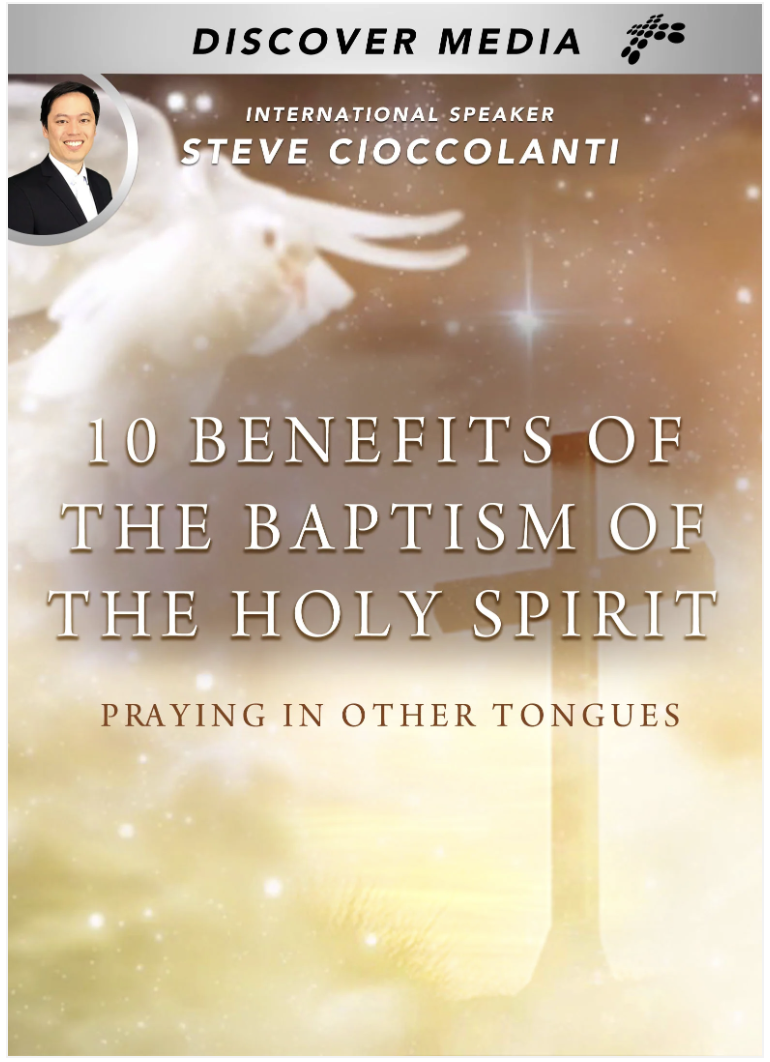
Go Deeper: Discover the Biblical Benefits of Praying in Tongues
f this teaching challenged or encouraged you, Pastor Steve has a powerful resource available called 10 Benefits of the Baptism of the Holy Spirit & Praying in Other Tongues.
This teaching explores:
What the Bible really says about tongues
The difference between ministry gifts and personal prayer language
How praying in the Spirit builds faith and spiritual strength
Why the early Church valued the baptism of the Holy Spirit
Common misconceptions surrounding charismatic gifts
How believers can grow in intimacy with God through Spirit-led prayer
Many Pentecostal and charismatic Christians point to Scriptures such as:
1 Corinthians 14 (“He who speaks in a tongue edifies himself”),
Jude 20 (“Building yourselves up… praying in the Holy Spirit”),
and Mark 16 regarding signs following believers, as foundational passages connected to praying in tongues.
Whether you are new to the topic or have studied spiritual gifts for years, this teaching is designed to help believers approach the subject biblically, thoughtfully, and with openness to the Holy Spirit.